
From Guesswork to Growth: A Case Study in Data-Driven Decision Making
by Emily Brown
18 September 2025
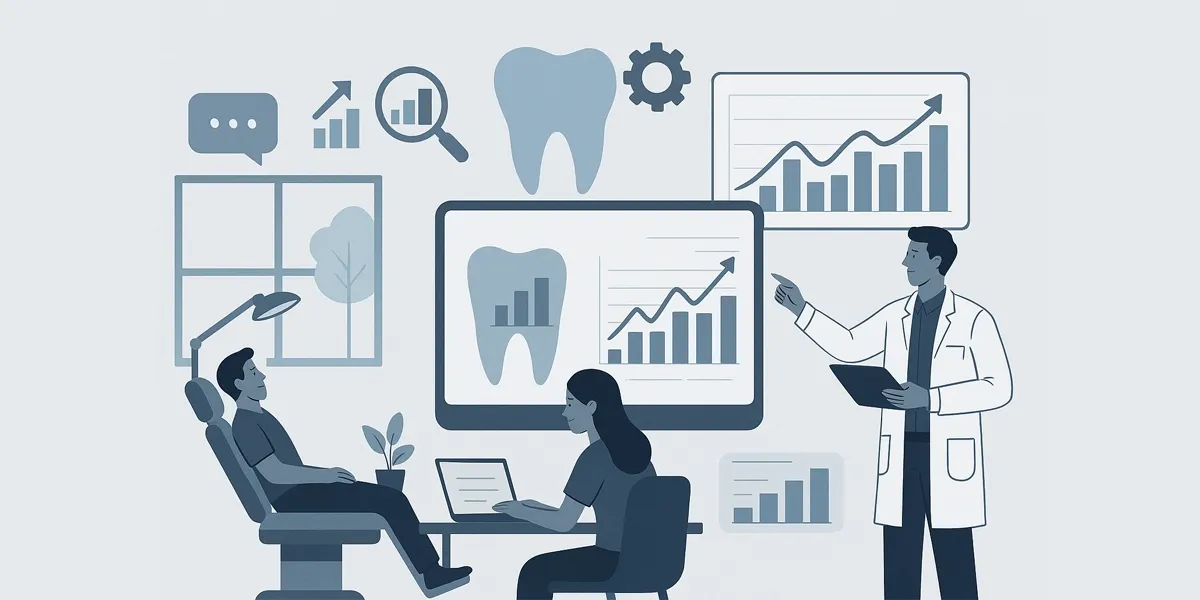
A case study showing how data-driven decision making with Dash Vigorant transformed dental practice growth through analytics, efficiency, and smarter marketing.
1. The Challenge: When Intuition Falls Short
For years, many dental professionals have managed their marketing and business operations through intuition rather than information. They would estimate what campaigns performed best, rely on anecdotal feedback, and adjust budgets based on gut feeling. But in today’s hyper-competitive environment, such guesswork limits visibility and weakens growth.
Dr. Ethan Ross, owner of a mid-sized dental studio in Austin, was no exception. His practice had a strong reputation but faced stagnation in new client inquiries. Despite steady marketing investments, he couldn’t pinpoint where returns were coming from or where they were being lost. The lack of transparent metrics left him uncertain about how to plan ahead.
This uncertainty was common across dental clinics in 2025, where digital marketing channels multiply faster than most owners can track. The need for data-driven dental decisions has never been greater, as practices now depend on analytics to connect daily marketing actions with actual business outcomes.
Without structured visibility, Dr. Ross’s team often debated which initiatives were truly effective. Their email campaigns had high open rates, but conversions were unclear. Their ads generated clicks but not consistent engagement. Each month felt like starting from scratch progress without proof.
2. The Turning Point: Seeing the Story Behind the Numbers
The breakthrough came when Dr. Ross decided to centralize his reporting system. Instead of relying on spreadsheets and fragmented agency reports, his team adopted an integrated analytics platform that unified performance metrics from all marketing channels into one visual dashboard.
This marked the beginning of what can best be described as a Dash Vigorant transformation a shift from assumption-based decision-making to measurable strategy. Though not a promotional tool, it represented a model for dental business intelligence that helped practices interpret their data with purpose.
For the first time, Dr. Ross could track campaign reach, engagement, and cost efficiency simultaneously. This transparency revealed what months of manual analysis had missed nearly 30% of the marketing budget was tied to underperforming channels. By reallocating funds to stronger-performing campaigns, his digital reach improved dramatically within a single quarter.
This wasn’t just a technological improvement it was a mindset change. The team began to rely on decision-making with data, understanding that success depends less on doing more and more on knowing better.
3. Building Growth Through Insight
With clear insights now available, Dr. Ross’s practice began to adopt more refined practice growth strategies. Instead of spreading marketing efforts across every platform, the team prioritized channels that demonstrated consistent engagement and cost efficiency.
Monthly meetings evolved from speculative discussions into structured, data-backed evaluations. Real-time reports enabled them to spot fluctuations early and respond immediately. The performance tracking impact was evident not only were results easier to measure, but decision-making became faster, smarter, and more confident.
Within six months, overall marketing costs decreased by 22%, while engagement improved by over 40%. The practice didn’t increase its budget; it optimized it. This shift exemplifies marketing optimization in dentistry, where clarity replaces complexity and every dollar spent can be justified with measurable outcomes.
Dr. Ross later noted that the change wasn’t about technology alone it was about accountability. “For the first time, our numbers told us a story,” he explained. “We didn’t just see results we understood them.”

4. The Process: Turning Data Into Direction
The real advantage came from real-time analytics benefits. The dashboard displayed live campaign data, highlighting what worked and what didn’t, week by week. The team could adjust ongoing efforts instead of waiting for end-of-month summaries.
For instance, one social media campaign initially showed strong impressions but low interaction. The analytics identified that its timing was off most posts went live during office hours, missing audience engagement peaks. Once corrected, click-through rates doubled within days.
This iterative process showcased how using Dash Vigorant to grow a dental business isn’t about automation it’s about awareness. By continuously observing trends, adjusting strategy, and learning from outcomes, Dr. Ross’s team turned digital uncertainty into a predictable growth engine.
5. Case Study: Data-Driven Decisions in Dentistry
So, how does data improve dental practice growth? The answer lies in the transition from reaction to prediction. Before adopting analytics, Dr. Ross’s clinic reacted to trends; after embracing data, it began to anticipate them.
The dashboard didn’t just summarize results it contextualized them. It showed which content themes generated the most engagement, which campaigns had declining traction, and which timeframes delivered the highest return. With this visibility, Dr. Ross could make informed budget decisions for upcoming quarters instead of guessing.
This evolution demonstrates examples of smarter decisions with dental data not through additional marketing, but through better interpretation. In many ways, this case reflects the broader industry’s transition from marketing dependency to marketing intelligence.
Within a year, Dr. Ross’s studio achieved record digital reach, and his team now uses analytics as a daily reference point. The guessing game is over; every campaign is tracked, analyzed, and refined based on evidence.
6. The Broader Shift: From Guesswork to Analytics in Dental Clinics
Dr. Ross’s experience mirrors a growing movement in dentistry: moving from guesswork to analytics in dental clinics. As marketing channels evolve and patient expectations change, practices that rely on instinct alone risk falling behind. Data isn’t replacing human insight it’s enhancing it.
The adoption of dental business intelligence tools gives clinics control over their strategy, allowing them to track engagement trends, measure reach, and evaluate content impact in real time. This shift is redefining how dental owners plan campaigns, allocate resources, and define success.
Where traditional marketing once relied on periodic updates, modern practices now depend on continuous insight. The combination of speed, clarity, and precision creates an environment where growth is no longer accidental it’s engineered.

7. The Impact: Sustainable, Measurable Growth
After one full year of data-driven transformation, Dr. Ross’s practice reported consistent growth across key digital metrics. Website traffic increased by 55%, ad conversion efficiency rose by 42%, and cost per lead dropped significantly. But beyond numbers, the true success was sustainability.
Through analytics, the team built a model of dental practice improvement that continuously evolves. The process taught them that every trend has context, and every metric has meaning. What once seemed like unpredictable market behavior now unfolds as a measurable, manageable system.
This reflects a growing trend across U.S. dental clinics, where owners are redefining success not just by revenue, but by informed control. Every insight gathered contributes to long-term scalability and smarter allocation of marketing resources.
8. Conclusion: A Smarter Future for Dentistry
The journey from uncertainty to understanding defines this transformation. Dr. Ross’s story encapsulates the essence of case study: data-driven decisions in dentistry a modern approach where informed decisions replace assumptions, and measurable growth replaces random success.
Through structured analytics, his practice turned information overload into clarity, transforming strategy into science. This evolution underscores the future of dentistry: where every choice is supported by insight, and every action contributes to a clear outcome.
As more clinics embrace decision-making with data, the dental industry continues to evolve from isolated effort to interconnected intelligence. In this environment, practice growth strategies are no longer built on instinct but on verified understanding..
Resource:
Aligning Dental Marketing with Operational Gaps in Dentistry
Emily Brown
Author Title